

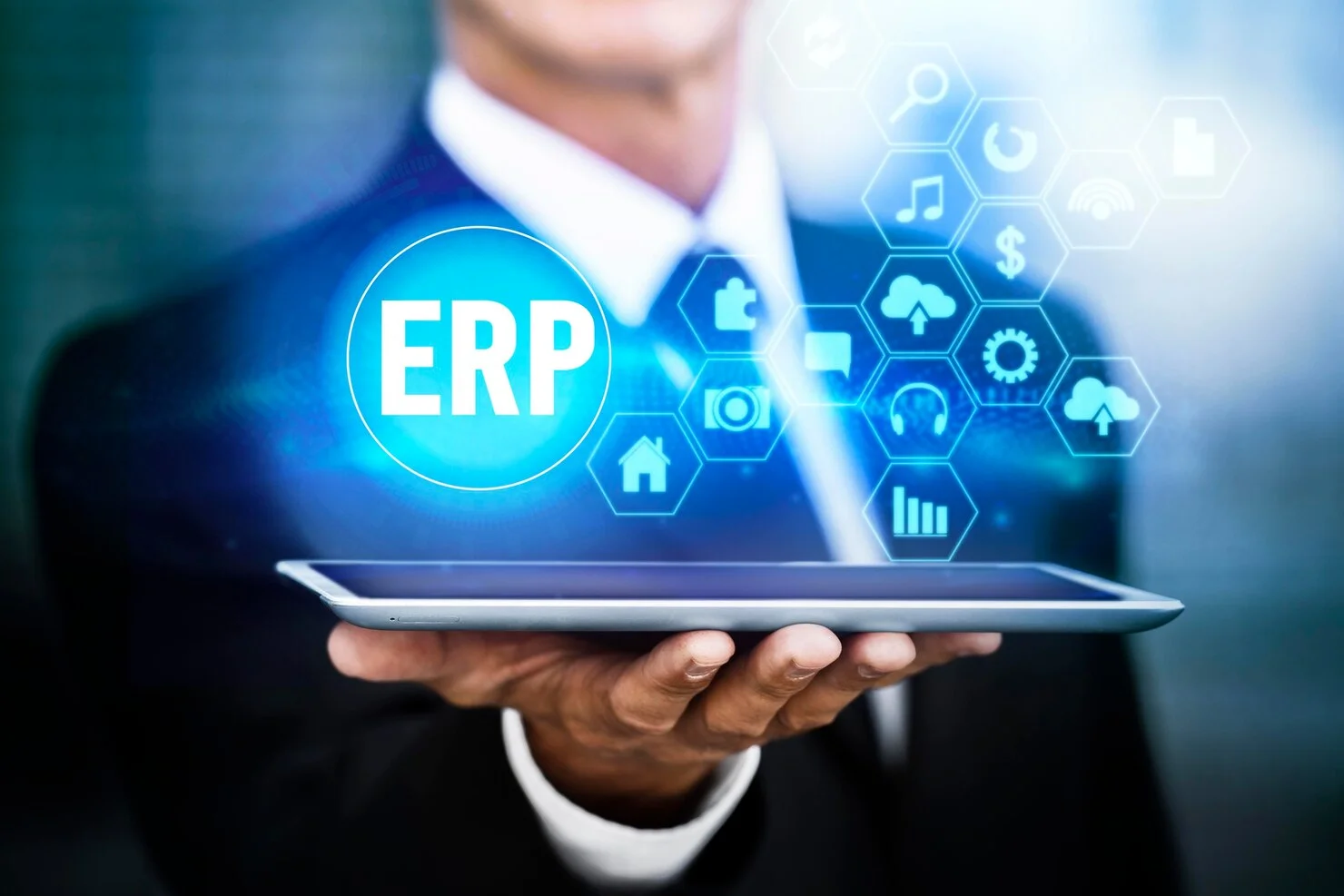
In today’s rapidly evolving digital economy, enterprises face increasing pressure to streamline operations, improve visibility, and make faster, data-driven decisions. Disconnected systems, manual processes, and siloed data can slow growth, increase costs, and reduce operational agility.
This is where Enterprise ERP Solutions play a critical role. For businesses, large enterprises, and technology decision-makers, implementing a modern ERP platform creates a unified digital backbone that connects finance, operations, supply chain, HR, and customer-facing functions into a single, intelligent system.
What Are Enterprise ERP Solutions?
Enterprise ERP (Enterprise Resource Planning) solutions are integrated software platforms designed to manage and automate core business processes across an organization. ERP systems centralize data and standardize workflows, enabling real-time visibility and control across departments.
Common ERP modules include:
- Finance and Accounting
- Human Resources (HR) and Payroll
- Supply Chain and Inventory Management
- Procurement and Vendor Management
- Manufacturing and Production Planning
- Sales, CRM, and Order Management
- Business Intelligence and Reporting
Popular enterprise ERP platforms include SAP S/4HANA, Oracle NetSuite, Microsoft Dynamics 365, Odoo Enterprise, and other industry-specific ERP systems.
Key Benefits of Enterprise ERP Solutions
A well-implemented enterprise ERP solution delivers strategic, operational, and financial advantages.
1. Unified Data and Real-Time Visibility
ERP creates a single source of truth.
Key advantages:
- Centralized enterprise data
- Real-time dashboards and KPIs
- Elimination of duplicate records
- Improved cross-department collaboration
This enables faster, more accurate business decisions.
2. Operational Efficiency and Automation
ERP automates manual and repetitive tasks.
Benefits include:
- Automated financial postings
- Streamlined procurement workflows
- Integrated inventory management
- Automated order-to-cash processes
This reduces errors, lowers operational costs, and improves productivity.
3. Scalable Growth and Business Agility
Enterprise ERP solutions scale with your business.
They support:
- Multi-entity and multi-currency operations
- Global compliance requirements
- Expansion into new markets
- Increased transaction volumes
This ensures long-term system stability and flexibility.
4. Improved Financial Control and Compliance
ERP strengthens financial governance.
Organizations gain:
- Real-time financial reporting
- Budgeting and forecasting tools
- Audit trails and compliance controls
- Improved cash flow management
This enhances financial transparency and regulatory compliance.
5. Better Customer and Supplier Management
ERP improves external relationship management.
Benefits include:
- Faster order fulfillment
- Improved vendor collaboration
- Accurate demand planning
- Enhanced customer satisfaction
This strengthens both upstream and downstream operations.
How Enterprise ERP Implementation Works
Successful ERP projects follow a structured implementation framework.
Step 1: Business Process Assessment
ERP implementation begins with:
- Mapping existing workflows
- Identifying process gaps and inefficiencies
- Defining business objectives and KPIs
- Establishing ERP success criteria
This ensures ERP aligns with strategic goals.
Step 2: ERP Platform Selection
Selecting the right ERP platform is critical.
Key evaluation factors:
- Industry-specific functionality
- Scalability and performance
- Cloud vs on-premise deployment
- Integration capabilities
- Security and compliance features
- Total cost of ownership
This ensures long-term ERP value.
Step 3: System Configuration and Customization
ERP is configured to reflect business operations.
This includes:
- Chart of accounts and financial structures
- Approval workflows and controls
- Role-based access and security
- Custom business logic and automation
Configuration improves system usability and adoption.
Step 4: Data Migration and System Integration
Legacy data is cleansed and migrated.
ERP implementation also includes:
- Integrating CRM, HR, and payroll systems
- Connecting inventory and warehouse systems
- Integrating eCommerce and supplier portals
This creates a connected enterprise ecosystem.
Step 5: User Training and Go-Live
Training ensures smooth system adoption.
Key activities:
- Role-based ERP training
- User acceptance testing (UAT)
- Go-live planning and cutover
- Hypercare and early-stage support
This minimizes business disruption.
Step 6: Continuous Optimization
ERP is continuously refined.
Ongoing improvements include:
- Process optimization
- Reporting and analytics enhancements
- New module adoption
- Performance tuning
This ensures ERP evolves with business needs.
Real-World Use Cases for Enterprise ERP Solutions
1. Manufacturing and Production
ERP helps manufacturers manage:
- Production planning and scheduling
- Bill of materials (BOM)
- Quality control and traceability
- Plant-level operations
2. Retail and Distribution
ERP enables:
- Real-time inventory visibility
- Demand forecasting
- Omnichannel order management
- Supplier and warehouse coordination
3. Financial Services and Professional Firms
ERP supports:
- Project accounting
- Resource utilization
- Billing and revenue recognition
- Compliance and audit reporting
4. Healthcare and Life Sciences
ERP helps manage:
- Procurement and inventory tracking
- Compliance and regulatory reporting
- Financial management
- Vendor and asset management
5. Multi-Entity Enterprises
ERP simplifies:
- Consolidated financial reporting
- Intercompany transactions
- Multi-currency operations
- Global compliance management
Why Choose Enterprise ERP Solutions
| Business Priority | ERP Advantage |
|---|---|
| Operational Efficiency | Automated, standardized workflows |
| Financial Visibility | Real-time financial insights |
| Scalability | Supports business growth |
| Compliance | Built-in controls and audit trails |
| Data Accuracy | Single source of truth |
| ROI | Reduced costs and improved productivity |
Best Practices for ERP Success
To maximize ERP value:
- Secure executive sponsorship
- Define clear business goals
- Standardize processes where possible
- Clean data before migration
- Invest in change management
- Train users thoroughly
- Measure performance with KPIs
These best practices significantly reduce ERP implementation risk.
Why Choose APAKUS for Enterprise ERP Solutions
At APAKUS, we deliver enterprise-grade ERP consulting and implementation services tailored to your business needs.
Our ERP services include:
- ERP strategy and roadmap development
- ERP platform selection and evaluation
- End-to-end ERP implementation
- Secure data migration and integration
- User training and adoption support
- Ongoing ERP optimization and support
Enterprise ERP Trends Shaping the Future
Leading enterprises are adopting:
- Cloud-based ERP platforms
- AI-powered forecasting and analytics
- Embedded business intelligence
- Industry-specific ERP solutions
- ERP + IoT integration for real-time operations
These trends highlight why modern ERP solutions are strategic, not just operational.
Conclusion: Power Seamless Operations with Enterprise ERP Solutions
Enterprise ERP solutions provide the foundation for efficient, scalable, and data-driven business operations. With the right ERP strategy and implementation partner, your organization can:
- Eliminate operational silos
- Improve financial and operational visibility
- Automate critical business processes
- Enhance compliance and governance
- Support enterprise growth and expansion
Ready to modernize your business operations?
Contact APAKUS today to schedule an ERP consultation and discover how our Enterprise ERP Solutions can transform your operations, improve efficiency, and maximize long-term ROI.





 447 Broadway, 2nd Floor, Suite 2531, New York, NY 10013, USA
 20 Wenlock Road, London, N1 7GU, UK