
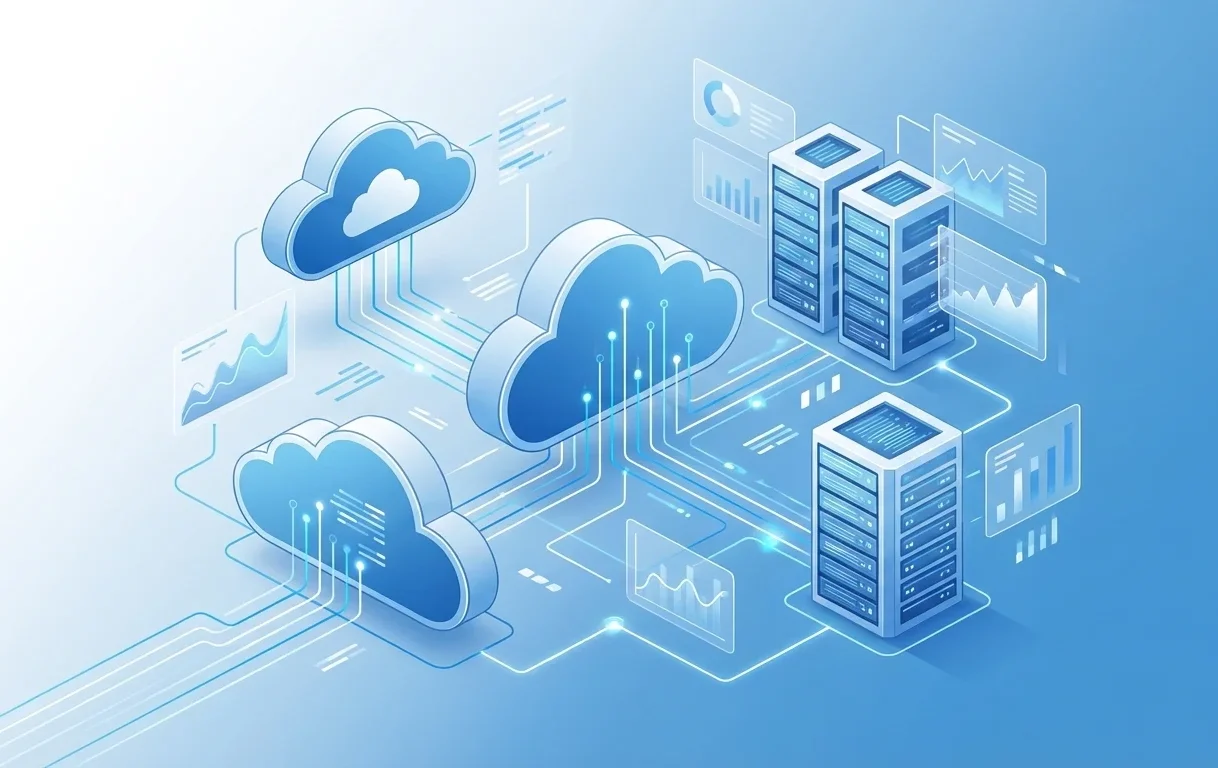
In today’s always-on digital economy, businesses depend on high-performing, secure, and reliable IT environments to stay competitive. Downtime, slow performance, and unmanaged cloud costs can directly impact revenue, productivity, and customer trust. That’s why efficient server and cloud management services have become a critical component of modern IT strategy.
For enterprises, growing businesses, and IT decision-makers, managing complex hybrid and cloud environments without expert support can be risky and resource-intensive. Professional server and cloud management services ensure your infrastructure runs smoothly, securely, and cost-effectively—so your teams can focus on innovation and business growth instead of troubleshooting systems.
What Are Efficient Server and Cloud Management Services?
Efficient server and cloud management services involve the proactive monitoring, maintenance, optimization, and security of on-premise servers, cloud platforms, and hybrid environments. These services ensure that IT infrastructure operates at peak performance while minimizing risks, downtime, and unnecessary costs.
Rather than relying on reactive IT support, managed services take a strategic, ongoing approach to infrastructure health. This includes managing physical servers, virtual machines, cloud workloads, storage systems, and network resources across platforms such as AWS, Microsoft Azure, Google Cloud, and private data centers.
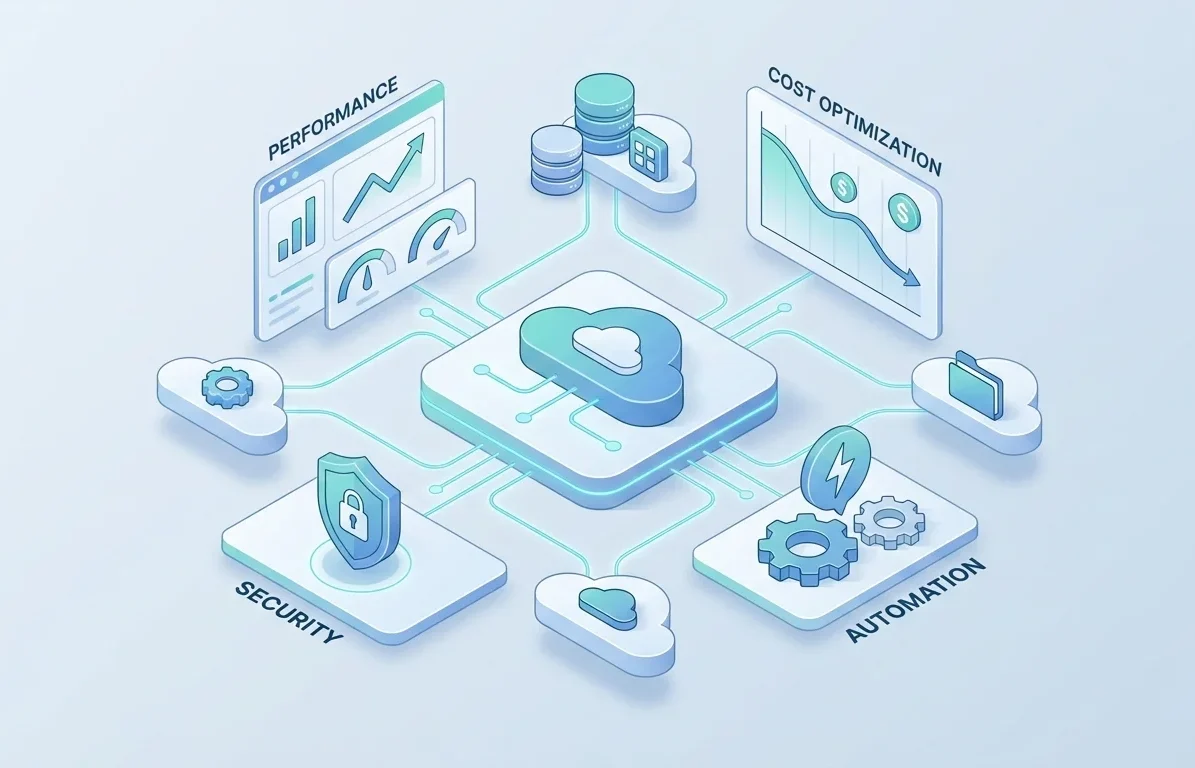
Core Areas of Server and Cloud Management
- Server monitoring and performance optimization
- Cloud resource management and cost control
- Patch management and system updates
- Security configuration and threat prevention
- Backup, disaster recovery, and business continuity
- Capacity planning and scalability management
These components work together to create a stable, scalable, and secure IT environment.
Key Benefits of Server and Cloud Management Services
Professional server and cloud management services deliver measurable business value beyond basic IT support.
1. Improved Performance and Reliability
Continuous monitoring ensures that servers and cloud resources are always operating at optimal levels.
Key advantages include:
- Faster application response times
- Reduced system slowdowns and bottlenecks
- Proactive issue detection before failures occur
- Higher system uptime and availability
This leads to better user experiences for both employees and customers.
2. Enhanced Security and Compliance
Cybersecurity threats are increasing, and unmanaged infrastructure is a major risk factor.
Server and cloud management includes:
- Regular security patching and updates
- Firewall and access control management
- Intrusion detection and vulnerability scanning
- Compliance support for industry standards
This helps protect sensitive business data and ensures regulatory requirements are met.
3. Cost Optimization and Resource Efficiency
Without proper oversight, cloud environments can become expensive and inefficient.
Managed services help by:
- Identifying underutilized resources
- Optimizing server and cloud usage
- Eliminating unnecessary cloud spend
- Improving budget forecasting and cost visibility
This results in better ROI from your IT infrastructure investments.
4. Scalability and Business Agility
As your business grows, your infrastructure must grow with it.
Efficient management enables:
- Rapid scaling of cloud and server resources
- Flexible infrastructure to support new projects
- Faster deployment of applications and services
- Support for seasonal or fluctuating workloads
This agility allows enterprises to respond quickly to market demands.
5. Reduced IT Burden and Operational Risk
Outsourcing server and cloud management reduces pressure on internal IT teams.
Benefits include:
- 24/7 monitoring and support
- Faster incident response times
- Reduced risk of human error
- Access to specialized infrastructure expertise
Your internal teams can focus on strategic initiatives instead of day-to-day maintenance.
How Server and Cloud Management Works
A structured approach ensures consistent performance, security, and efficiency.
Step 1: Infrastructure Assessment and Discovery
The process begins with a full evaluation of your IT environment, including:
- On-premise servers and virtual machines
- Cloud platforms and workloads
- Network and storage systems
- Security configurations and access controls
- Current performance and cost metrics
This assessment identifies risks, inefficiencies, and optimization opportunities.
Step 2: Monitoring and Performance Management
Advanced monitoring tools track:
- CPU, memory, and disk usage
- Application performance
- Network traffic and latency
- System availability and uptime
Real-time alerts enable proactive issue resolution before they impact business operations.
Step 3: Patch Management and Maintenance
Keeping systems updated is critical for both security and performance.
This includes:
- Operating system updates
- Application and middleware patches
- Firmware updates
- Scheduled maintenance windows
Regular maintenance reduces vulnerabilities and improves system stability.
Step 4: Security and Backup Management
Security and data protection are built into daily operations.
Services include:
- Security policy enforcement
- Backup scheduling and testing
- Disaster recovery planning
- Incident response support
This ensures data protection and rapid recovery in case of failures or cyber incidents.
Step 5: Optimization and Continuous Improvement
Ongoing optimization ensures long-term efficiency.
This involves:
- Resource usage analysis
- Cost optimization strategies
- Performance tuning
- Capacity planning for future growth
This continuous approach maximizes infrastructure value over time.
Common Use Cases for Server and Cloud Management
1. Hybrid IT Environments
Many enterprises operate both on-premise and cloud systems. Management services unify control, monitoring, and security across hybrid environments.
2. High-Availability Business Applications
Mission-critical systems such as ERP, CRM, and financial platforms require constant uptime and expert monitoring.
3. Cloud Cost Management
Organizations using AWS, Azure, or Google Cloud often struggle with unpredictable spending. Managed services help control and optimize cloud costs.
4. Disaster Recovery and Business Continuity
Server and cloud management ensures reliable backups and rapid recovery to minimize downtime during outages or disasters.
5. Compliance-Driven Industries
Healthcare, finance, and regulated industries benefit from structured monitoring, auditing, and security management.
Why Choose Professional Server and Cloud Management Services
| Business Priority | Management Service Benefit |
|---|---|
| Uptime | Proactive monitoring and rapid issue resolution |
| Security | Continuous patching and threat protection |
| Cost Control | Optimized cloud and server utilization |
| Scalability | Flexible infrastructure growth |
| Efficiency | Reduced internal IT workload |
| Reliability | Strong backup and disaster recovery |
These benefits directly support business continuity and long-term growth.
Best Practices for Server and Cloud Management
To get the most from your infrastructure:
- Implement 24/7 monitoring and alerting
- Standardize patch and update schedules
- Use automated backup and recovery systems
- Regularly review cloud usage and costs
- Apply strict access controls and security policies
- Conduct periodic infrastructure audits
These practices help maintain performance, security, and cost efficiency.
Why Choose APAKUS for Server and Cloud Management Services
At APAKUS, we provide enterprise-grade server and cloud management services designed to maximize performance, security, and cost efficiency.
Our services include:
- 24/7 infrastructure monitoring
- Cloud and server optimization
- Security and patch management
- Backup and disaster recovery
- Hybrid and multi-cloud management
- Ongoing performance and cost reporting
Industry Trends in Server and Cloud Management
Enterprises are increasingly adopting:
- AI-driven infrastructure monitoring
- Automated remediation and self-healing systems
- Hybrid and multi-cloud strategies
- Predictive capacity planning
- Cloud cost governance platforms
These trends are shaping the future of IT operations and infrastructure management.
Conclusion: Optimize Your IT Environment with Efficient Server and Cloud Management
Efficient server and cloud management services are essential for maintaining reliable, secure, and high-performing IT environments. By outsourcing infrastructure management to experts, businesses gain improved uptime, stronger security, better cost control, and greater operational agility.
With professional server and cloud management services, your organization can:
- Reduce downtime and performance issues
- Strengthen cybersecurity and compliance
- Optimize cloud and server costs
- Scale infrastructure with confidence
- Focus internal teams on strategic growth
Ready to optimize your IT infrastructure?
Contact APAKUS today for a consultation and discover how our server and cloud management services can help your business achieve peak performance and long-term success.



 447 Broadway, 2nd Floor, Suite 2531, New York, NY 10013, USA
 20 Wenlock Road, London, N1 7GU, UK