
In today’s digital-first business environment, data is one of your most valuable assets. From customer information and financial records to intellectual property and operational insights, organizations depend on data to drive decisions and maintain a competitive edge. However, with increasing data volumes and growing cyber threats, controlling who can access what data has become a critical business priority.
Data Access Governance provides the framework, policies, and technologies needed to ensure that sensitive data is accessed only by the right people, at the right time, and for the right reasons. For enterprises, regulated industries, and growing businesses, strong data access governance is essential to reduce risk, ensure compliance, and protect business continuity.
What Is Data Access Governance?
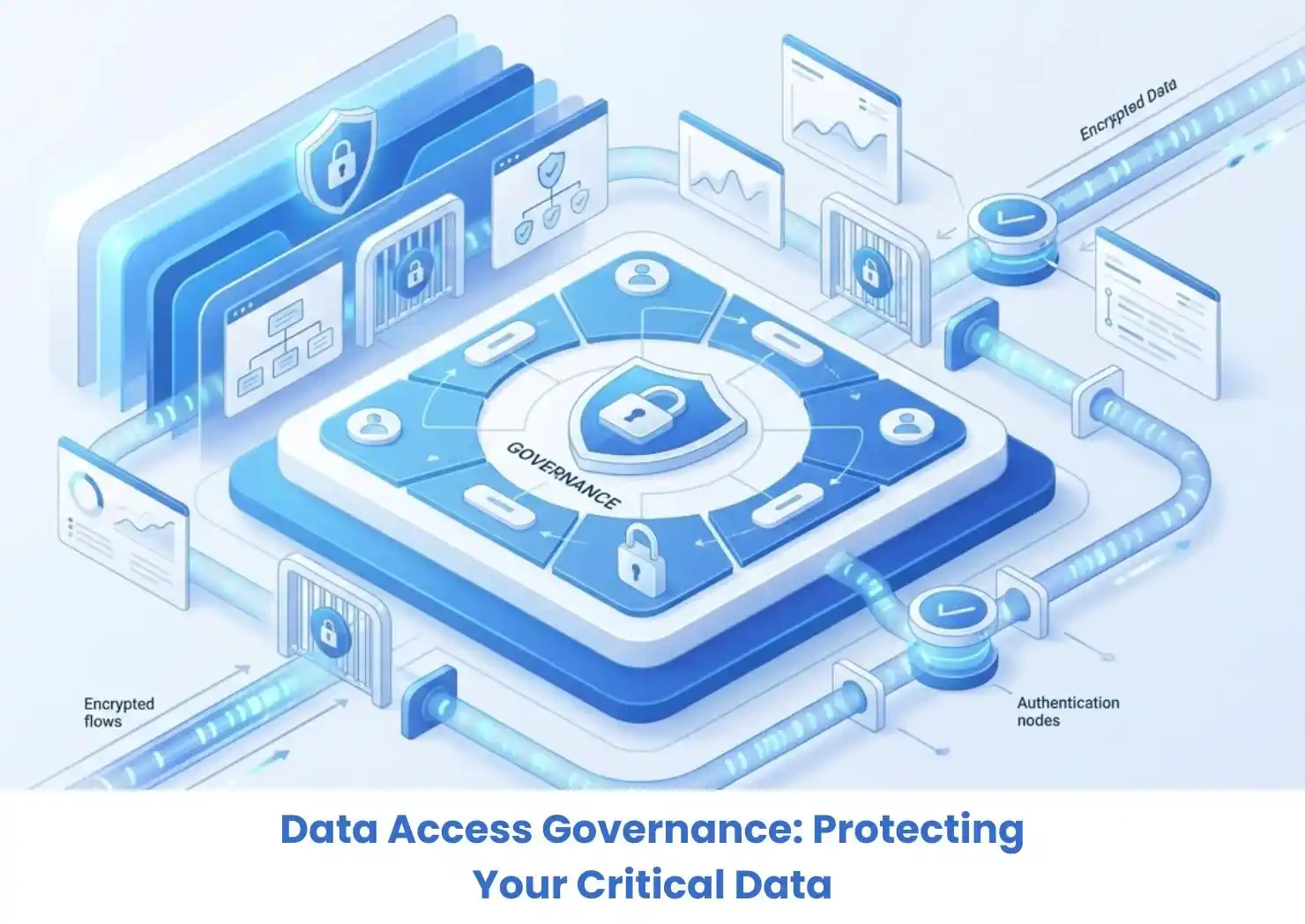
Data Access Governance refers to the policies, processes, and tools used to manage, monitor, and control user access to sensitive data across systems, applications, and cloud environments. It ensures that data access aligns with business roles, security policies, and regulatory requirements.
Key components of data access governance include:
- Role-Based Access Control (RBAC): Access based on job roles and responsibilities
- Identity and Access Management (IAM): Centralized user identity and access control
- Least Privilege Access: Users receive only the minimum access required
- Access Reviews & Certifications: Regular validation of user access rights
- Audit Trails & Monitoring: Continuous tracking of data access activities
- Policy Enforcement: Automated rules to control and restrict access
Data access governance ensures that sensitive information remains protected while still enabling employees to work efficiently.
Key Benefits of Data Access Governance
Implementing a strong data access governance strategy delivers significant business, security, and compliance benefits:
1. Enhanced Data Security
Controlling access reduces the risk of data breaches, insider threats, and unauthorized data exposure.
- Prevents unauthorized access to sensitive systems
- Reduces attack surface for cyber threats
- Protects intellectual property and customer data
- Strengthens overall cybersecurity posture
2. Regulatory Compliance and Risk Reduction
Many industries must comply with strict data protection regulations.
- Supports compliance with GDPR, HIPAA, ISO 27001, SOC 2, and other frameworks
- Provides auditable access records
- Reduces risk of fines and legal penalties
- Ensures consistent enforcement of data protection policies
3. Improved Visibility and Control
Data access governance provides centralized insight into who has access to what data.
- Full visibility into user permissions
- Identification of excessive or outdated access
- Better control over privileged accounts
- Reduced risk from orphaned or dormant accounts
4. Reduced Insider Threats
Not all data risks come from outside attackers. Internal misuse can be just as damaging.
- Limits excessive internal access
- Detects unusual access behavior
- Prevents data misuse or accidental exposure
- Strengthens internal security accountability
5. Operational Efficiency and Scalability
Automated access governance streamlines user management across growing organizations.
- Faster onboarding and offboarding
- Automated access provisioning and deprovisioning
- Scalable governance for cloud and hybrid environments
- Reduced manual administrative workload
How Data Access Governance Works
A successful data access governance implementation follows a structured approach:
Step 1: Data Classification and Discovery
- Identify sensitive and critical data
- Classify data based on sensitivity and business impact
- Map where data resides across systems and cloud platforms
Step 2: Identity and Role Definition
- Define business roles and responsibilities
- Map roles to required data access
- Implement role-based access models
Step 3: Policy Development and Enforcement
- Create access control policies
- Define approval workflows for access requests
- Enforce least-privilege access principles
Step 4: Automation and Integration
- Integrate with IAM, ERP, CRM, and cloud platforms
- Automate user provisioning and access removal
- Centralize access management across systems
Step 5: Continuous Monitoring and Auditing
- Track access activity in real time
- Conduct periodic access reviews
- Generate compliance and audit reports
- Detect and respond to suspicious behavior
Real-World Use Cases of Data Access Governance
Finance and Banking
- Protect financial records and transaction systems
- Control access to sensitive customer data
- Ensure regulatory compliance and audit readiness
Healthcare
- Restrict access to patient health records
- Support HIPAA and healthcare compliance
- Prevent unauthorized data sharing
Enterprise IT and Cloud Environments
- Govern access across hybrid and multi-cloud platforms
- Manage privileged user access
- Secure DevOps and administrative accounts
Human Resources
- Protect employee personal and payroll data
- Control access to HR systems
- Ensure proper access removal during employee exits
Retail and E-commerce
- Secure customer payment and identity data
- Control access to inventory and pricing systems
- Protect marketing and customer analytics platforms
Why Data Access Governance Is Essential for Modern Enterprises
| Business Priority | Governance Benefit |
|---|---|
| Security | Prevents unauthorized data access |
| Compliance | Supports regulatory and audit requirements |
| Risk Management | Reduces insider and external threats |
| Visibility | Centralized access oversight |
| Scalability | Supports enterprise and cloud growth |
| Efficiency | Automates access lifecycle management |
Best Practices for Effective Data Access Governance
- Apply least-privilege access by default
- Conduct regular access reviews and certifications
- Automate onboarding and offboarding workflows
- Monitor privileged accounts closely
- Integrate access governance with cloud and IAM systems
- Educate employees on data security responsibilities
- Maintain audit-ready documentation and reporting
Why Choose APAKUS for Data Access Governance
At APAKUS, we deliver enterprise-grade Data Access Governance solutions designed to protect your most critical data while enabling secure business operations. Our services include:
- Data discovery and classification
- Role-based access control implementation
- Identity and access management (IAM) integration
- Automated access provisioning and reviews
- Compliance reporting and audit readiness
- Continuous monitoring and risk analytics
Conclusion: Protect Your Business with Strong Data Access Governance
Data Access Governance is no longer optional—it is a business-critical requirement for protecting sensitive information, maintaining compliance, and reducing cyber risk. By implementing a structured, automated access governance framework, organizations gain better control, stronger security, and greater confidence in how their data is used.
Ready to protect your critical data and strengthen your security posture?
Contact APAKUS today to schedule a consultation and discover how our Data Access Governance Services can help you safeguard sensitive data, reduce risk, and ensure compliance across your enterprise.




 447 Broadway, 2nd Floor, Suite 2531, New York, NY 10013, USA
 20 Wenlock Road, London, N1 7GU, UK