

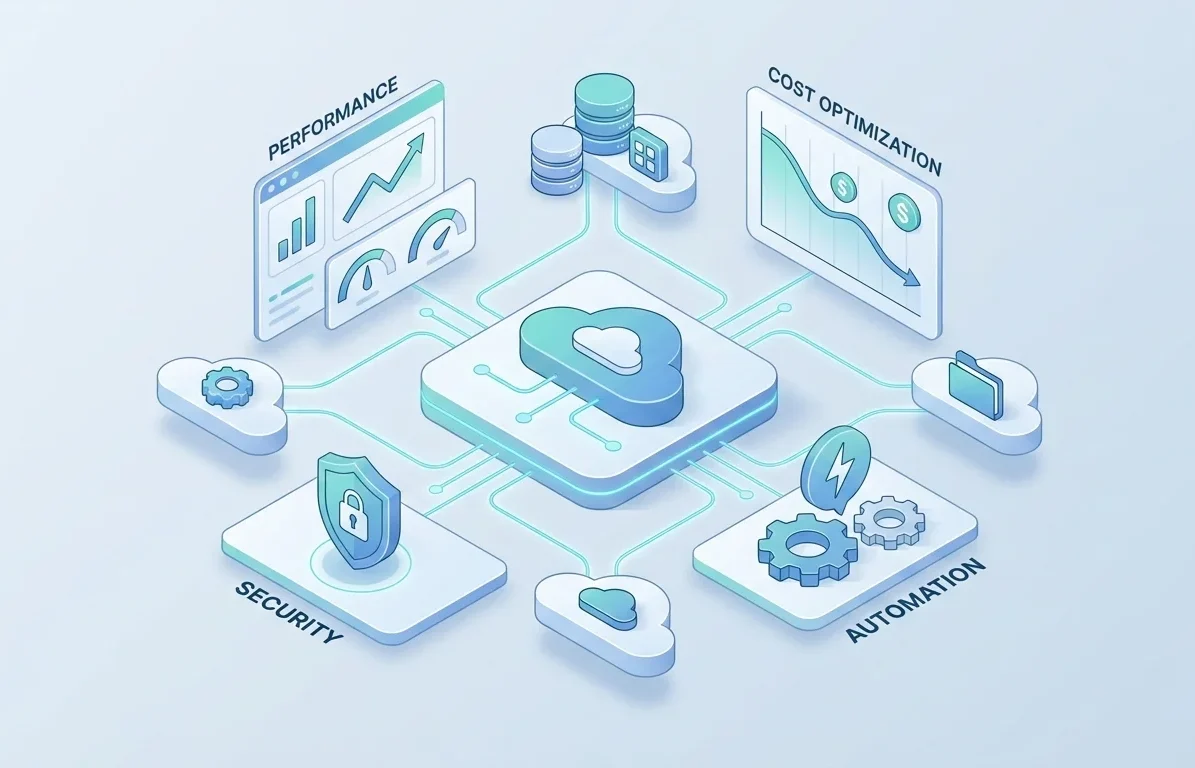
As businesses continue to accelerate their digital transformation, cloud computing has become the backbone of modern IT operations. From hosting critical applications to enabling remote work and advanced analytics, cloud platforms power today’s enterprise environments. However, simply migrating to the cloud is not enough. Without proper oversight, cloud environments can become complex, costly, and vulnerable.
That’s where cloud services management becomes essential. For enterprises, growing businesses, and IT decision-makers, professional cloud services management ensures your cloud environment is optimized for performance, security, scalability, and cost efficiency—allowing you to get maximum value from your cloud investments.
What Is Cloud Services Management?
Cloud services management refers to the ongoing administration, monitoring, optimization, and governance of cloud-based resources and services. It covers the full lifecycle of cloud operations, including provisioning, performance management, security, compliance, and cost control.
This service applies across major cloud platforms such as Amazon Web Services (AWS), Microsoft Azure, Google Cloud Platform (GCP), and private or hybrid cloud environments.
Core Components of Cloud Services Management
- Cloud resource provisioning and configuration
- Performance monitoring and optimization
- Security management and compliance enforcement
- Cost monitoring and cloud financial management (FinOps)
- Backup, disaster recovery, and business continuity
- Policy management and governance
Together, these components ensure your enterprise cloud services operate efficiently and align with business objectives.
Key Benefits of Cloud Services Management
Professional cloud services management delivers significant operational and financial advantages.
1. Improved Cloud Performance and Availability
Continuous monitoring ensures applications and workloads run at peak performance.
Benefits include:
- Faster application load times
- Reduced latency and service disruptions
- Proactive issue detection and resolution
- Higher availability for mission-critical systems
This leads to better user experiences and improved business continuity.
2. Stronger Cloud Security and Compliance
Cloud environments require constant security oversight.
Cloud services management includes:
- Identity and access management (IAM)
- Security patching and configuration management
- Threat detection and vulnerability monitoring
- Compliance support for regulatory standards
This reduces the risk of breaches and helps protect sensitive business and customer data.
3. Cloud Cost Optimization and Financial Control
One of the biggest challenges of cloud adoption is uncontrolled spending.
Managed cloud services help by:
- Identifying unused or underutilized resources
- Rightsizing compute and storage
- Implementing cost allocation and chargeback models
- Providing detailed cloud usage and cost reports
This ensures better ROI from your cloud infrastructure solutions.
4. Scalability and Business Agility
Cloud services management enables seamless scaling based on business needs.
Key advantages include:
- Rapid provisioning of new resources
- Flexible scaling for peak workloads
- Support for global expansion
- Faster deployment of applications and services
This allows enterprises to respond quickly to changing market demands.
5. Reduced Operational Complexity
Managing multi-cloud or hybrid environments can be complex.
Professional management simplifies:
- Centralized visibility across cloud platforms
- Standardized policies and controls
- Automated workflows and processes
- Reduced burden on internal IT teams
This improves operational efficiency and reduces human error.
How Cloud Services Management Works
A structured, lifecycle-based approach ensures consistent optimization.
Step 1: Cloud Environment Assessment
The process starts with a comprehensive review of your cloud environment, including:
- Cloud architecture and workloads
- Security configurations and access controls
- Current performance and utilization
- Cloud spending and billing structure
- Compliance and governance posture
This assessment identifies risks, inefficiencies, and optimization opportunities.
Step 2: Cloud Configuration and Optimization
Based on findings, cloud resources are optimized for performance and cost.
This includes:
- Rightsizing virtual machines and storage
- Optimizing network configurations
- Improving application performance settings
- Implementing automation for provisioning
This ensures your cloud environment is aligned with workload requirements.
Step 3: Monitoring and Incident Management
24/7 monitoring tools track:
- Application and system performance
- Resource utilization
- Availability and uptime
- Security events and anomalies
Automated alerts and rapid response minimize downtime and business disruption.
Step 4: Security, Backup, and Compliance Management
Security and resilience are integrated into daily operations.
This includes:
- Security policy enforcement
- Regular patching and updates
- Backup scheduling and recovery testing
- Compliance reporting and audit support
This strengthens your overall cloud security posture.
Step 5: Continuous Improvement and Governance
Cloud services management is an ongoing process.
Activities include:
- Monthly optimization reviews
- Cost and usage trend analysis
- Capacity planning
- Policy updates and governance improvements
This continuous approach ensures long-term cloud efficiency.
Real-World Use Cases for Cloud Services Management
1. Multi-Cloud Environments
Enterprises using AWS, Azure, and GCP benefit from centralized cloud services management for unified visibility and control.
2. Rapidly Scaling Businesses
Fast-growing companies use managed cloud services to scale infrastructure quickly without increasing internal IT headcount.
3. Regulated Industries
Healthcare, finance, and legal organizations rely on cloud services management to maintain compliance and data protection.
4. Remote and Hybrid Workforces
Cloud services management ensures secure access, performance, and reliability for distributed teams.
5. Application Modernization
Organizations modernizing legacy applications use cloud services management to support migration, optimization, and ongoing performance.
Why Choose Cloud Services Management for Your Business
| Business Objective | Cloud Services Management Advantage |
|---|---|
| Cost Control | Reduced waste and optimized cloud spend |
| Security | Stronger protection and compliance |
| Performance | Optimized workloads and availability |
| Scalability | Flexible infrastructure growth |
| Efficiency | Reduced operational overhead |
| Visibility | Centralized monitoring and reporting |
These benefits make enterprise cloud services more predictable, secure, and cost-effective.
Best Practices for Optimizing Your Cloud Environment
To maximize the value of your cloud investments:
- Implement FinOps for cloud cost governance
- Use automated scaling and provisioning
- Apply least-privilege access policies
- Regularly audit cloud configurations
- Test backups and disaster recovery plans
- Monitor performance and usage trends
These best practices help maintain a healthy and optimized cloud environment.
Why Choose APAKUS for Cloud Services Management
At APAKUS, we deliver enterprise-grade cloud services management designed to help organizations optimize performance, security, and cost efficiency.
Our cloud services management offerings include:
- 24/7 cloud monitoring and support
- Cloud performance and cost optimization
- Security and compliance management
- Backup and disaster recovery
- Hybrid and multi-cloud management
- Ongoing reporting and optimization reviews
Cloud Services Management Trends
Enterprises are increasingly adopting:
- AI-driven cloud monitoring and optimization
- FinOps frameworks for cost governance
- Hybrid and multi-cloud architectures
- Zero Trust cloud security models
- Automated compliance and policy enforcement
These trends highlight the growing importance of professional cloud services management.
Conclusion: Get More Value from Your Cloud with Cloud Services Management
Cloud services management is essential for organizations that want to maximize the value of their cloud investments. By implementing professional cloud services management, businesses can improve performance, strengthen security, reduce costs, and scale with confidence.
With the right cloud management strategy, your organization can:
- Optimize cloud infrastructure and workloads
- Protect critical data and systems
- Gain visibility into cloud usage and spending
- Support business growth and innovation
- Reduce operational complexity
Ready to optimize your cloud environment?
Contact APAKUS today for a consultation and discover how our cloud services management services can help you improve performance, security, and ROI across your cloud ecosystem.






 447 Broadway, 2nd Floor, Suite 2531, New York, NY 10013, USA
 20 Wenlock Road, London, N1 7GU, UK