

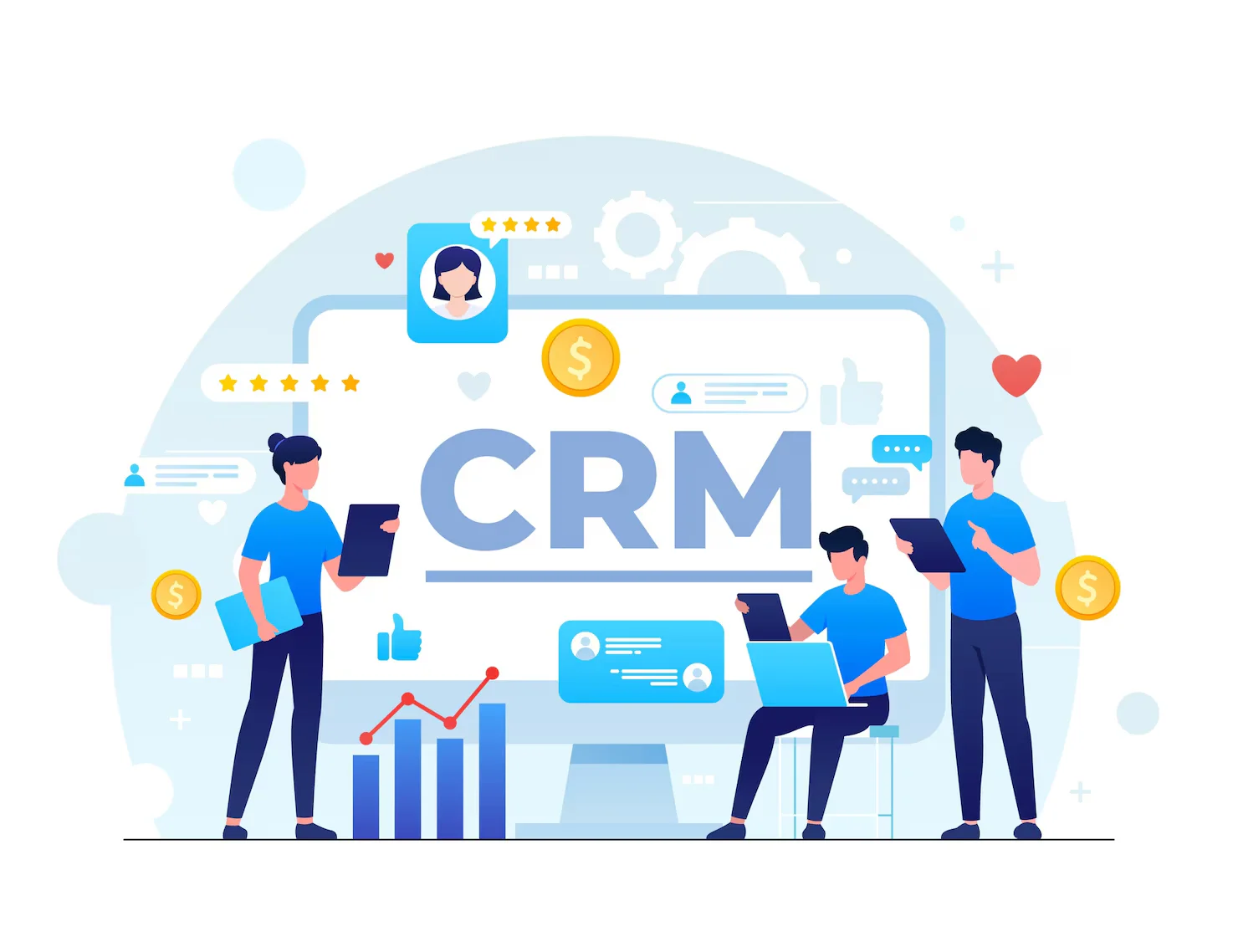
In today’s highly competitive digital marketplace, customer experience is one of the most powerful differentiators for business success. Companies that understand, engage, and nurture their customers consistently outperform those that don’t. However, as businesses grow, managing customer data, communications, and sales processes manually becomes inefficient and error-prone.
This is where CRM implementation becomes essential. For businesses, enterprises, and technology decision-makers, a properly executed CRM implementation transforms how customer relationships are managed—improving visibility, collaboration, and long-term customer value
What Is CRM Implementation?
CRM implementation is the process of deploying, configuring, and integrating a Customer Relationship Management (CRM) system into your business operations. A CRM system centralizes customer data and supports sales, marketing, and customer service teams by providing a single source of truth.
Popular CRM platforms include Salesforce, HubSpot, Microsoft Dynamics 365, Zoho CRM, and other enterprise CRM solutions.
Core Elements of CRM Implementation
- CRM platform selection and setup
- Customization to match business workflows
- Data migration and cleansing
- Integration with existing systems
- User training and adoption
- Ongoing optimization and support
A successful CRM implementation ensures your CRM aligns with business goals and user needs.
Key Benefits of CRM Implementation
A well-executed CRM implementation delivers measurable business value across departments.
1. Centralized Customer Data
CRM implementation creates a unified customer database.
Benefits include:
- 360-degree view of customer interactions
- Elimination of data silos
- Improved data accuracy and consistency
- Better collaboration between teams
This enables smarter, data-driven decision-making.
2. Increased Sales Productivity
CRM systems streamline sales workflows.
With CRM implementation, sales teams benefit from:
- Automated lead and opportunity management
- Sales pipeline visibility
- Task and follow-up automation
- Real-time performance tracking
This helps sales teams close deals faster and more efficiently.
3. Enhanced Customer Experience
CRM implementation improves how customers are served.
Key advantages include:
- Faster response times
- Personalized communication
- Consistent customer interactions
- Improved issue resolution
This leads to higher customer satisfaction and loyalty.
4. Improved Marketing Effectiveness
CRM implementation empowers marketing teams.
Marketing benefits include:
- Better audience segmentation
- Targeted and personalized campaigns
- Campaign performance tracking
- Improved lead nurturing
This results in higher conversion rates and stronger marketing ROI.
5. Better Reporting and Forecasting
CRM systems provide powerful analytics.
With proper CRM implementation, businesses gain:
- Real-time dashboards and KPIs
- Sales and revenue forecasting
- Customer behavior insights
- Data-driven strategic planning
This improves leadership visibility and business planning.
How CRM Implementation Works
A structured CRM implementation approach ensures long-term success and user adoption.
Step 1: Business Needs Assessment
The process begins with understanding:
- Sales, marketing, and service workflows
- Business objectives and KPIs
- Data sources and system dependencies
- User roles and requirements
This ensures the CRM is aligned with operational needs.
Step 2: CRM Platform Selection
Based on requirements, the most suitable CRM platform is selected.
Factors include:
- Scalability and enterprise readiness
- Customization capabilities
- Integration options
- Security and compliance features
- Total cost of ownership
This ensures your CRM supports future growth.
Step 3: System Configuration and Customization
The CRM is configured to match your processes.
This includes:
- Custom fields and objects
- Sales stages and workflows
- Automation rules
- Role-based access controls
Customization ensures high user adoption and efficiency.
Step 4: Data Migration and Integration
Existing customer data is cleaned and migrated.
CRM implementation also includes:
- Integrating email, ERP, and accounting systems
- Connecting marketing automation platforms
- Syncing customer support tools
This creates a seamless digital ecosystem.
Step 5: User Training and Go-Live
Training ensures teams can use the CRM effectively.
Key activities include:
- Role-based user training
- Documentation and best practices
- Pilot testing and feedback
- Full system launch
This minimizes disruption and increases adoption.
Step 6: Ongoing Optimization and Support
CRM implementation doesn’t end at go-live.
Continuous improvement includes:
- Performance monitoring
- Workflow enhancements
- User feedback and refinements
- New feature adoption
This ensures your CRM evolves with your business.
Real-World Use Cases for CRM Implementation
1. Sales Team Transformation
Organizations implement CRM to standardize sales processes, improve pipeline visibility, and increase close rates.
2. Customer Support Optimization
CRM implementation helps support teams manage tickets, track issues, and deliver faster resolutions.
3. Marketing and Lead Management
Marketing teams use CRM to track leads, automate campaigns, and measure marketing ROI.
4. Multi-Department Collaboration
CRM connects sales, marketing, finance, and support teams through shared customer data.
5. Enterprise Growth and Expansion
Growing enterprises use CRM implementation to scale customer management across regions and teams.
Why Choose CRM Implementation for Your Business
| Business Goal | CRM Implementation Advantage |
|---|---|
| Revenue Growth | Improved sales productivity and conversions |
| Customer Retention | Better engagement and satisfaction |
| Operational Efficiency | Automated workflows and reduced manual work |
| Data Visibility | Real-time reporting and insights |
| Scalability | CRM grows with your business |
| ROI | Higher return from sales and marketing investments |
Best Practices for Successful CRM Implementation
To maximize success:
- Clearly define business objectives
- Secure executive sponsorship
- Involve end users early
- Clean and standardize data before migration
- Invest in user training and change management
- Continuously review and optimize workflows
These best practices significantly improve CRM adoption and long-term value.
Why Choose APAKUS for CRM Implementation
At APAKUS, we deliver enterprise-grade CRM implementation services designed to help organizations streamline customer relationships and drive growth.
Our CRM implementation services include:
- CRM strategy and platform selection
- Custom configuration and automation
- Secure data migration
- System integration
- User training and onboarding
- Ongoing CRM support and optimization
CRM Trends Shaping Modern Businesses
Leading organizations are adopting:
- AI-powered CRM and predictive analytics
- CRM + marketing automation integration
- Omnichannel customer engagement
- Mobile CRM for remote sales teams
- Advanced customer journey tracking
These trends highlight the growing importance of professional CRM implementation.
Conclusion: Transform Customer Relationships with CRM Implementation
CRM implementation is no longer optional—it’s a strategic investment for businesses that want to grow, compete, and deliver exceptional customer experiences. With the right CRM implementation strategy, your organization can:
- Centralize and secure customer data
- Improve sales, marketing, and service efficiency
- Enhance customer engagement and retention
- Gain actionable insights for better decisions
- Scale customer operations with confidence
Ready to streamline your customer relationships?
Contact APAKUS today to schedule a CRM consultation and discover how our CRM implementation services can help you drive growth, improve customer satisfaction, and maximize ROI.






 447 Broadway, 2nd Floor, Suite 2531, New York, NY 10013, USA
 20 Wenlock Road, London, N1 7GU, UK